

Drill Bit
What Is Drill Bit?
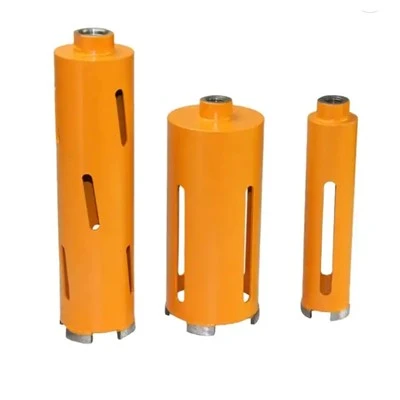
A drill bit is a cutting tool that's attached to a drill to create holes in materials by removing material, usually in a circular cross-section. Drill bits come in many different shapes, sizes, and types, and can be used on a variety of materials.
Why Choose Us
Rich Experience
Located in Asia's largest diamond tool production base, many years of experience in this industry, the brand has considerable popularity in the industry.
R&D Capability
Deep cooperation with many high efficiencies diamond cutting field, with full-time and part-time 5-10 people R & D team, can adapt to multiple harsh working conditions of cutting, grinding product development.
Shipping Service
We have established a robust shipping service offered to ensure timely and secure delivery of orders worldwide.
Reliable Supply
We offer a vertically integrated supply chain model to ensure reliable long-term supply and complete traceability.




Longevity & Toughness: One of the most important features of a premium drill bit is the fact that it's not going to give up on you after a few uses. While cheaper alternatives might get the job done for a short period, they are prone to premature wear. Comparatively, a well-crafted drill bit can withstand rigorous usage over time, making it not only more sustainable but a cost-effective choice in the long run. So, while they may be a little more costly upfront, they will be saving you money on replacements down the line.
Enhanced Performance & Speed: A premium drill bit often comes with advanced, cutting-edge technology and improved designs which directly translate to superior and enhanced performance. These kinds of features can include specific split points that cut faster and reduce wandering, material compositions that extend life or special coatings that reduce heat and increase lubrication. Such features not only make your jobs faster and more efficient, but they also ensure that the results are consistent and uphold your quality workmanship.
Precision & Accuracy: Quality drill bits are engineered with precision in mind because what matters more than maintaining the structural integrity of the workpiece? This is particularly important for jobs that require accuracy like woodworking and metalworking. The engineering and effort upheld within top-tier drill bits greatly reduce your chances of errors and ensure that each hole is drilled in the exact place it was intended for.
Versatility: Quality drill bits not only come in a variety of different types and sizes, but they can usually tackle a wide range of materials and projects. Thanks to the use of high-quality materials and components in the drill bit fabrication, they demonstrate exceptional performance across various materials, like wood, metal, plastic, aluminium, or mild and heavy steel. This is, of course, dependent on the type of application, the thickness of the material and what the best practice advice states on the packaging.
Reduced Risk of Damage: Cheaper drill bits can cause material splintering, chipping or even damage to the drill itself. High-quality drill bits are less likely to cause these kinds of issues, preserving the integrity of the workpiece, minimising any accidents, and ensuring safety.
Professional Results: Whether you're a DIY enthusiast or a professional tradesperson, using quality drill bits can elevate the quality of your work. The clean, precise, burr-free holes they create contribute to a more polished and professional end product.
Gives You Confidence: Knowing that you are using reliable, top-tier tools can boost your confidence while you're working. You can focus on the task at hand without worrying about whether the equipment will hold up.
Different Types of Drill Bits and What They Are Used For
To drill a satisfactory hole in any material, the correct type of drill bit must be used. Many jobs around the house require a hole of some kind to be drilled - whether it is putting up a shelf, building a cabinet or hanging a light fitting. For basic requirements, a set of high-speed steel twist drills and some masonry bits will probably be sufficient for the average handyman. But for more sophisticated jobs/material, others bits will be required - perhaps larger, or designed for a specific material/purpose. Learning how to sharpen drill bits is cost effective, it better to keep a bit sharp by occasional sharpening rather than waiting until it becomes really blunt. A sharp bit cuts better with less effort whether used in a power or hand drill. A sharp bit will also give a cleaner hole.
Twist bits
Usually referred to as twist drills, twist bits are probably the most common drilling tools used by the handyman with either a hand or electric drill. The front edges cut the material and the spirals along the length remove the debris from the hole and tend to keep the bit straight.
They can be used on timber, metal, plastics and similar materials. Most twist bits are made from either:
- 'High speed steel' (HSS), these are suitable for drilling most types of material, when drilling metal the HSS stands up to the high temperatures.
- 'Carbon steel', these bits are specially ground for drilling wood and should not be used for drilling metals, they tend to be more brittle, less flexible than HSS bits.
- Twist bits are also available coated with Titanium nitride (TiN), these are easily identified by the gold like colour. This coating increases the hardness of the bit and adds a self-lubricating property. The coating is only really effective when metal is being drilled, it has little effect when working with other materials.
- Twist drills are usually available in sizes 0.8-12 mm plus. They are designed for drilling relatively small holes, they sometimes tend to clog quickly especially when the wood is 'green' so when drilling deep holes (especially in hardwood) the bits should be withdrawn regularly to remove the waste.
- Special care is required when using the smallest sizes since these bits are thin and brittle. Always hold the drill square to the work and apply only light pressure when drilling.
- Sharpening - use a drill sharpener, a grindstone jig or an oilstone.
- Titanium nitride bits cannot be sharpened without destroying the coating (although if the drill needs sharpening, the coating will probably have already been destroyed). Forming the correct angle at the tip is important for efficient cutting.
Masonry bit
As the name suggests, these are designed for drilling into brick, block, stone, quarry tiles or concrete. The cutting tip is often made from tungsten carbide bonded to a spiralled steel shaft. Some masonry drills are described as 'durium tipped', this term refers to a highly durable silicon bronze alloy used instead of tungsten as the cutting point.
Masonry drills are usually used in a power drill; although they can be used with a lot of effort in a hand brace. Most masonry bits can be used with a hammer action power drill, but always check as the action is quite punishing on the bit and cheaper bits have been known to shatter when subjected to the pounding. Always use a slow rotational speed for drilling into harder materials to avoid overheating the tip, and frequently withdraw the bit to remove dust. Long Masonry bits (300 to 400mm) are available for drilling through masonry walls. Bit sizes range from 4 to 16mm. Sharpening - use a drill sharpener or grindstone to sharpen the tungsten carbide tip.
Spur point bit
Also known as a wood or dowel bit, they have a central point and two raised spurs that help keep the bit drilling straight. The bit cuts timber very fast when used in a power drill and leaves a clean sided hole. They are ideal for drilling holes for dowels as the sides of the holes are clean and parallel. Sizes range from 3 to 10mm. Spur point bits should only be used for drilling wood or some plastics.
Sharpening - a bit fiddly as it has to be done by hand. Sharpen the point and spurs with a fine file or edge of a fine grindstone; the angle between the point and spurs should be 90°.
Bullet Pilot Point
With their central point and two spurs, Bullet drills resemble spur point bits, but can be used in metal, wood and plastics. Unlike normal twist drills, the twisted flutes are ground away; making a truer, more accurate bit than normal twist bits. They cut a clean hole and cause little damage when they break through the back of the workpiece.
Bit sizes range from 1.5 to 13 mm.
Sharpening - cannot be carried out satisfactorily.
Countersink
Although not a true 'drill', it is used in a power or hand drill to form the conical recess for the heads of countersunk screws. These bits tend to be designed for use on soft materials such as timber and plastics, not metals. When used with a power drill to counter sink an existing hole, the bit tends to 'chatter', leaving a rough surface. Better results be will obtained if the countersink bit is used before the hole is drilled, then take care to ensure that the hole is in the centre of the countersunk depression.
Countersinks are available with fitted handles so that they can be used by hand twisting, often easier than changing the bit in the drill when only a relatively few holes need countersinking.
Sharpening: difficult, but can be done with a fine triangular file.
Countersink with clearance drill
These combination bits are quite clever, they drill the clearance hole and countersinks it all in one stroke. Can be used in a power drill or some routers. Different bits are required for different size of clearance holes and they are probably not cost effective unless a large number of a given hole size need to be drilled and countersunk.
Sharpening - difficult, due to shape of spur points.
Drill Bit Material Comparison


Whether you are a professional or simply engaging in some DIY around the house, knowing the material that your drill bits are made of as well as what each specific drill bit type is needed for what job are important factors to consider when you want to drill holes, especially into tough materials like cast iron. Different drill bit materials work better with different surfaces, whilst different drill bit types will also work better for certain jobs.
Titanium Coated
Titanium coating make for a durable and tough drill bit thanks to the hard, ceramic material from which they are made.
These kinds of bits are also useful as they allow you to run your drill at a faster level of rotations per minute without the risk of an excessive build up of heat.
There are a range of different kinds of titanium coatings available, with the following being the most common:
Titanium Carbon Nitride (TiCN): Long lasting and highly accurate as well as more wear resistant, TiCN drill bits are incredibly strong and hard.
Titanium Nitride (TiN): This kind of coating can increase the life span of the drill bit up to three times.
Titanium Aluminum Nitride (TiAN): This is considered to be longer lasting one comparison to the TiN coating, with the drill bits that feature this coating having a lifespan of up to five years.
The main issue that can come about with titanium coated drill bits is that they can't be sharpened effectively, so once they are dulled, they won't return to the level of sharpness that they once had.
High-Speed Steel
With a good level of resistance to both wear and heat, high speed steel drill bits- otherwise known as HSS drill bits- are the most common to be found on the market due to their versatility and ability to work on a wide range of materials, including metal and wood.
Low Carbon Steel
One of the least expensive choices of a drill bit, low carbon bits are best used with certain types of plastic along with soft woods as they need to be sharpened more often than other kinds of drill bits.
High Carbon Steel
High carbon steel drill bits are an improved version of low carbon steel bits, able to be used with some particularly soft metals as well as hardwood.
Diamond
This is one of the hardest drill bit materials due to being made with polycrystalline diamond, or PCD. PCD is made up of a layer of diamond particles that have been bonded to a support made up of carbide. These bits are commonly used on material such as fiberglass, ceramic tiles, marble, stone, concrete and more. Despite the tough nature of these drill bits, they can be problematic as they are susceptible to heat and will be ruined if overheated. They are also a more costly option. Diamond drill bits tend to be used to grind material away on a micro level.
Cobalt Coated
These drill bits are able to retain their hardness at higher temperatures in comparison to run-of-the-mill high speed steel ones. That being said, they also tend to be somewhat more brittle.
Cobalt coated drill bits are often used when it comes to drilling stainless steel as well as other, more difficult metals.
Carbide Tipped
Carbide tipped drill bits can dissipate heat and hold an edge much longer than other kinds of drill bits. They are also incredibly hard, but can be brittle and chip easily if not used with the proper care. Due to their ability to hold up when drilling abrasive materials, carbide tipped drill bits are frequently used in drilling processes that involve fiberglass reinforced plastic.
Zirconium Coated
Any steel and metallic drill bits are able to be coated with zirconium in order to improve their strength and reduce friction, which can improve the precise nature of the drilling.
Tips For Picking Out the Drill Bit You Need
Here's a metric for you: cost per hole drilled. For work that requires lots of holes, it helps to know how to get the best cost per hole. Consider these areas while selecting a drill bit: geometry, material, and finish.
Anatomy of a drill bit
Understanding the distinguishing features of a drill bit is the first step toward identifying the proper products to use. A drill bit consists of four basic parts: the diameter, the shank, the flutes, and the point.
Drill BIT ANGLES EXPLAINED
The 118° point angle is a smaller point angle and is ideal for drilling softer materials such as aluminum alloys. However, the 118° point may walk, requiring a center punch to spot drill the hole.
The blunt point angle of a 135° split point drill bit produces smaller chips and can be used for harder and stronger materials. A split point is used to keep the bit centered without a pilot hole, preventing the point from walking.
The importance of finishes
Finishes offer a layer of strength and protection to a drill bit's surface.
Black oxide
Resists rust and corrosion and reduces friction between the bit and the work piece.
Last up to 50% longer than standard HSS drill bits.
Black & gold
Resists corrosion and breakage while increasing clearance for maximum lubricity. Black & gold bits are not prone to chipping and flaking.
When it comes to using drill bits, mistakes are not uncommon. These are some of the most common mistakes that you should avoid to ensure safety:
Using the wrong drill bit: Choosing the wrong type or size of drill bit can damage the material being drilled, the drill bit itself, or even the drill. Always use the appropriate drill bit for the material and project being worked on.
Applying too much pressure: Applying too much pressure on the drill can cause the bit to bend or break, damage the material being drilled, or cause injury to the user. Let the drill do the work and apply gentle and steady pressure to avoid damaging the bit or material.
Overheating the bit: Overheating the bit can cause it to become dull and ineffective, or even melt and break. Use the proper speed setting for the drill, and apply lubrication or cooling agents to reduce friction and heat buildup.
Neglecting to use safety gear: Failure to use proper safety gear such as safety goggles, gloves, and earplugs can lead to injury or long-term health problems. Always wear the appropriate safety gear when using a drill to protect yourself from flying debris, loud noises, and other hazards
Drill bits are essential tools used in various applications, from woodworking to metalworking and construction. Choosing the right drill bit for the task at hand can save time, increase efficiency and ensure safety. It is crucial to consider the type of material to be drilled, the desired hole size, and the required precision.
Our Factory
Danyang Sinodream IMP&EXP Co., Ltd. is affiliated to Dongri Group, the main business is importing and exporting elevator, machinery, and automobiles parts, diamond saw blade, alloy saw blade, many kinds of drill bits, cutting tools, grinding tools, power tools and small garden tools. Our products are exporting to the United States, Europe, Middle East and southeast Asia and many other markets.
FAQ