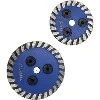
When it comes to hardware parts grinding, a diamond grinding wheel for metal stands in a class of its own. These precision abrasive tools embed industrial-grade synthetic diamond grit into a bonded matrix-resin, metal, or vitrified-delivering hardness and wear resistance that conventional aluminum oxide wheels simply cannot match. Whether you're processing tungsten carbide components, hardened steel fixtures, or non-ferrous alloy hardware parts, the right superabrasive wheel translates directly into tighter tolerances, superior surface finishes, and significantly reduced per-part costs.
Understanding Diamond Grinding Wheels for Metal
Not every grinding wheel works the same way in every situation. Diamond grinding wheels for metal work better than regular wheels because synthetic diamond, which has a Mohs rating of 10, keeps its cutting shape for a much longer time when it is loaded.
Bond Types and Their Applications
The bond matrix tells the wheel how to work in certain situations. Here are the three types of core bonds that are important for grinding metal parts:
Resin bond wheels cut more smoothly and coolly, and they leave smoother surfaces with Ra values as low as 0.1 µm. When temperature sensitivity is important, they are good for finish grinding of carbide tools and precision metal parts.
Metal bond wheels are sintered under high pressure from bronze, cobalt, or copper powders. These wheels keep their shape the best and last the longest, making them great at grinding a lot of very hard or rough materials continuously and in large quantities.
Vitrified bond wheels offer the stiffness of metal bonds combined with the dressability of resin bonds. This makes them perfect for CNC cutting centers that work with mixed batches of hardware.
Choosing the wrong bond type speeds up wheel wear and lowers the quality of the part. It is imperative that you know the material of your workpiece and the finish you want it to have before placing your order.
Common Operational Issues
One of the most common problems operators run into is glazing, which happens when the bond surface gets smooth and the wheel stops cutting. It happens when the quantity of the abrasive is too high for the hardness of the surface or when the wheel speed is too high. By dressing the wheel with a silicon carbide stick, new diamond grit is exposed, and cutting speed is restored right away. When there is loading, swarf gets stuck in the wheel face. This can be fixed by changing the flow of coolant and lowering the feed pressure.
How to Use Diamond Grinding Wheels Effectively for Metal Hardware Parts?
To use a diamond grinding wheel for metal effectively, you need to prepare it, choose the right parameters, and always follow safety rules. In any of these steps, rushing hurts the quality of the part and the life of the wheel.
Step-by-Step Operational Guide
Check the wheel for cracks and make sure the spindle speed number matches the machine RPM before attaching it. A good rule of thumb for choosing grit sizes is that D46–D76 grit is good for aggressive stock removal and D15–D25 grit is good for fine finishing passes. For resin bond wheels, the best surface speeds are usually between 20 and 35 m/s. On the other hand, metal bond wheels can handle up to 60 m/s on the right axles. It is highly suggested to use a synthetic water-soluble coolant for wet grinding. This lowers the thermal stress on both the wheel and the object, which significantly lowers the chance of surface micro-cracks.
A company that makes hardware parts that work with hardened steel brackets moved from using aluminum oxide to using a resin bond diamond wheel with D46 grit. The cycle time per part went down by 28%, the number of times the wheel had to be replaced went down by over 60%, and the regularity of the surface finish got better enough that a second cleaning step was no longer needed. The money was returned in just one production quarter.
Comparison and Selection Guide for Diamond Grinding Wheels
One of the most important business choices a procurement specialist for a grinding company has to make is picking the right type of diamond grinding wheel for metal.
Diamond vs. CBN vs. Conventional Abrasives
Diamond grinding wheels for metal are the best tool for working with carbides, ceramics, glass, and metals that aren't made of iron. CBN (cubic boron nitride) wheels are better for carbon and alloy steels because diamond can react chemically with iron at high grinding temperatures, which speeds up wear. While traditional aluminum oxide and silicon carbide wheels are still cheap for working with soft metals and light deburring, they aren't as good for grinding precise hardware over time because they wear out quickly when they're put through heavy loads.
Selecting by Grit Size, Concentration, and Hardness
The range of abrasive content values is from 50 to 125. When the percentage is higher, the wheel lasts longer, but the grinding forces are higher, which is good for hard, weak materials. Lower concentration works best on softer metals that need to be cut with a lot of force. For hardware parts with complicated shapes, a vitrified bond at a medium concentration (75–100) works well for keeping the shape and being able to be fixed.
In the US market, well-known brands like DeWalt, Bosch, Norton, and 3M continue to offer reliable off-the-shelf options for common tasks. But for exporters and OEM brand owners who need unique specs like specific bore sizes, non-standard diameters, private-label packing, or paperwork that meets CE/ISO standards, working directly with a specialized maker gives them a lot more freedom and saves them money.
Procurement and Supply Chain Considerations for Diamond Grinding Wheels
Buying diamond grinding wheels for metal from a business to business (B2B) has more factors than just unit price. Importers who sell to hardware stores or building material sellers must follow the same rules for supply stability, MOQ flexibility, and certification compliance.
To find reliable suppliers, you need to make sure that their quality control processes are written down, that they have the right export certifications (CE, ISO 6123, ANSI B7.1), and that they can customize the logo, the packaging, the grit specification, and the bond formulation for OEMs. When you buy in bulk from well-known Chinese manufacturers, you can save a lot of money compared to buying from a domestic distributor. This is especially true for mid-sized tool importers who buy between $100,000 and $3,000,000 worth of tools every year.
Reliability in delivery is just as important. Confirmed lead times, clear logistics tracking, and quick communication before shipping stop production problems that hurt customer relationships in industrial and hardware supply chains-especially when sourcing a diamond grinding wheel for metal applications where replacement timing directly impacts job site schedules. Low MOQ choices let wholesalers try out new SKUs without having to buy too much inventory.
Maximizing Performance and Longevity of Diamond Grinding Wheels
Operational discipline protects the return on the investment in buying diamond grinding wheels for metal and makes them last a lot longer.
RPM and Dressing Protocols
Always stay within the wheel's stated maximum RPM. Going over this limit can cause the wheel to fail catastrophically and is against OSHA and ANSI safety guidelines. Cutting shape stays the same with regular dressing intervals that are set by checking the surface finish instead of set time plans. A simple ring test before fixing shows that the structure is solid. To keep the bond from breaking down between uses, wheels should be kept in places with controlled humidity and away from temperature extremes.
New developments in superabrasive technology, like hybrid metal-resin bonds and electroplated diamond profiles for automated CNC lines, are making these wheels more useful. If B2B buyers keep up with these changes, they can set up their businesses to benefit from increased efficiency as hardware manufacturers speed up the adoption of automation.
Conclusion
When it comes to grinding metal parts, a diamond grinding wheel for metal is better than other types of abrasives because it lasts longer, keeps measurements more accurately, and costs less per part. Choosing the right bond type, grit size, and concentration for the job is what makes the difference between efficient production and costly repair. This is true whether you're making carbide tools, hardened steel fixings, or precision non-ferrous parts. The safest way for importers, wholesalers, and OEM brand owners to keep the supply chain stable is to buy from a producer with a history of exporting and customizing goods.
FAQ
What grit size should I use for hardware parts grinding?
Coarser grits (D46–D76) are good for aggressively removing material from tough metals, while finer grits (D15–D25) give surfaces a smooth finish. Match the grit to the Ra surface roughness standard that is needed.
Can one diamond wheel handle multiple metal types?
Diamond grinding wheels for metal work great on ceramics, carbides, and metals that aren't made of iron. CBN wheels work better with carbon or metal steels because they stay chemically stable at working temperatures.
How do I extend the working life of my grinding wheel?
Dress the wheel often with a silicon carbide stick to expose new grit, keep the coolant flowing properly while wet grinding, stay within the rated RPM range, and store wheels in a dry, stable place when not in use.
Is dry grinding acceptable?
Some resin bond formulations allow dry grinding for short cycles, but for precision hardware applications, it is strongly suggested that you use wet grinding to avoid thermal micro-cracking and make the wheel and workpiece last longer.
Partner With SNJ for Reliable Diamond Grinding Wheel Supply
SNJ, which stands for Danyang Sinodream Imp&Exp Co., Ltd. and was founded in 2003, has been selling high-quality abrasives and cutting tools to hardware distributors, Amazon brand sellers, and importers in the US for more than 20 years. SNJ is a certified diamond grinding wheel for metal seller with CE and ISO qualifications. They offer OEM customization, cheap bulk pricing, and low MOQ choices. Email Colin@sinodream.biz right now to get a quote.
References
1. Abrasives Industry Report - Freedonia Group, 2023
2. Superabrasives: Grinding Wheels and Abrasive Products - Industrial Diamond Association of America, 2021
3. Handbook of Modern Grinding Technology - R. King & R. Hahn, Chapman & Hall, 1986
4. ISO 6123: Safety Requirements for Bonded Abrasive Products - International Organization for Standardization, 2019
5. ANSI B7.1: Safety Requirements for the Use, Care, and Protection of Abrasive Wheels - American National Standards Institute, 2020
6. Manufacturing Engineering & Technology - Serope Kalpakjian & Steven Schmid, Pearson, 2022.