Diamond grinding wheels are a revolutionary abrasive technology in modern tool making. They use industrial-grade manmade diamond crystals and carefully designed bonding structures to remove material more efficiently than any other method. Hard metals, tungsten carbide inserts, ceramics, and PCD cutting edges are just a few of the materials that these specialized tools are great at working with. By using diamond's Mohs hardness rating of 10, manufacturers can achieve micron-level accuracy in measurements and keep surface finishes consistent across high-volume production runs. This makes these wheels essential for CNC tool grinding, insert sharpening, and precision profiling tasks.
Understanding Diamond Grinding Wheels: Types, Benefits, and Working Principles
How Diamond Abrasive Technology Works
Diamond grinding wheels work by using the mechanical action of diamond particles inserted in a bonding material. Each diamond particle acts as a tiny cutting tool. When the wheel spins at set speeds, these crystals use compression and shearing forces to break up the surface of the object. Self-sharpening is the process by which the bond system slowly removes worn diamonds to reveal new cutting edges.
This process is very different from regular aluminum oxide wheels, where the grit wears away faster. Metal bonds keep the diamond in place the best for strong stock removal, resin bonds cut more smoothly and leave better finishes, and vitrified bonds have the best of both worlds for a wide range of uses.
Common Wheel Configurations for Tool Manufacturing
In tool production settings, different wheel shapes are used for different grinding jobs. Face grinding carbide end mills works best with cup wheels that have continuous rims because they give a constant contact area and smooth finishes on the tool sides. For shaping drill bit shanks and finely controlling diameters, cylindrical grinding is done with straight wheels.
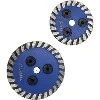
Dish-shaped wheels can get into small spaces when shaping complicated tool shapes like form cuts or custom inserts. Turbo-segmented designs improve the flow of cooling when heat-sensitive materials are being ground wet. This keeps cutting edges from getting damaged by heat. The right arrangement is chosen based on the shape of the item, the quality of the surface that needs to be achieved, and the production goals.
Core Performance Advantages
Using diamond grinding technology to make tools has benefits that go beyond just getting rid of waste material. Because they are much harder than regular abrasives, they cut quickly, which directly boosts productivity-when shops move from regular wheels to these, cycle times drop by 30–40%. Extreme wear resistance means longer service life. Premium metal-bond wheels can handle thousands of tools before they need to be replaced, which is a lot longer than ceramic wheels that only last a few hundred cycles.
Stable grinding performance keeps cutting accuracy high throughout the wheel's life, and little physical drift makes sure that the quality of the tool is the same from batch to batch. It can be used on tungsten carbide grades from K10 to K40, ceramic alloys, cermets, and polycrystalline materials, so you don't have to keep a lot of different wheels on hand. Cutting edges stay hard and intact because they don't get damaged by metalworking because they don't produce much heat. Good self-sharpening keeps cutting forces even, and smooth chip removal keeps trapped particles from damaging the surface.
When you put these success traits together, you get great value for money. Even though they cost more to buy at first than regular wheels, they end up being cheaper in the long run because they last longer, they don't need to be replaced as often, and they're more productive, which means more paid machine hours.
Diamond Grinding Wheels vs. Alternative Abrasives: Making the Right Choice
Performance Comparison Across Abrasive Types
Procurement managers have to weigh practical costs against material suitability when looking at abrasive choices. When grinding ferrous materials like sharpened steels, tool steels, and high-speed steel tools, CBN (Cubic Boron Nitride) wheels are most common. This is because diamond's carbon structure would chemically react and turn into graphite at high temperatures. CBN is as hard as diamond and can be heated and cooled with iron-based metals without melting. However, each unit costs 20 to 30 percent more than diamond grinding wheels of the same size.
Silicon carbide wheels are a cheap way to get rid of rough stock when working with non-ferrous metals that aren't very hard. However, when working with hard materials, their friable grain structure breaks down quickly, so they need to be dressed and replaced often. When used for grinding, carbide wheels usually only last 15 to 20 percent as long as diamond grinding wheels. Ceramic aluminum oxide wheels work pretty well on tool steels and are reasonably priced, but they aren't very precise or consistent, which is what current tight-tolerance forging standards require.
Conventional carbide burrs can be used for portable grinding, but they can't get the surface details or precise measurements needed for finish grinding. The choice comes down to how hard the material is. Hard materials above 60 HRC or non-metallic hard compounds work best with diamond technology, while ferrous materials below this level work better with CBN options.
Material Compatibility Guidelines
If you know which materials react best to diamond grinding wheels, you won't have to buy expensive samples and try them out. Tungsten carbide tools, such as end mills, inserts, and wear parts, is the best choice because diamond's higher toughness breaks up carbide's brittle matrix easily. Ceramic cutting inserts, which are used more and more in high-speed machining, need diamond's cutting action to get edges that are sharp without micro-chipping.
Even though PCD (polycrystalline diamond) and PCBN tool blanks contain diamond or CBN, they still need diamond grinding wheels to be shaped and sharpened because they are made up of different materials. Diamond cutting is also useful for making natural stone, engineered quartz, and glass tooling parts. But don't use diamond grinding wheels on carbon steels, stainless steels, or cast iron. The carbon in diamond reacts chemically with metallic materials, which speeds up wheel wear and makes the surface less smooth.
How to Choose the Best Diamond Grinding Wheel for Your Manufacturing Needs
Critical Selection Parameters
To choose the right diamond grinding wheel, you must first know exactly what your grinding process needs. The application type determines basic wheel geometry-for example, are you grinding tool flutes, insert edges, or cylinder ODs? Each needs a different set of wheel shapes and specs. The material hardness directly influences required diamond concentration and bond hardness; harder workpieces need a higher diamond content (concentration 100–125) to maintain cutting efficiency.
Grit size controls surface finish and stock removal rate. When roughing, coarse grits (80–120 mesh) remove material quickly but leave scratch marks that can be seen. Fine grits (320–600 mesh) make the faces and sides of tools look like mirrors, which is important for cutting edge quality. Medium sizes (180-240 mesh) are good for general-purpose jobs because they mix speed with quality of finish.
Bond type selection significantly impacts performance characteristics. Metal bonds, like bronze or copper-tin, keep diamonds in place and make wheels last longer. They are perfect for automatic production that needs to follow regular grinding parameters. Resin ties are better for heat-sensitive materials and physical tasks because they cut more smoothly and leave a better finish. Vitrified links give the structure the rigidity needed for precise form grinding and let you control how hot the wheel gets.
The wheel geometry-diameter, thickness, arbor size, and rim width-must match the specs of your machine and the size of the piece you are cutting. Larger wheels keep the speed around the edges constant, but they need more horsepower. Smaller wheels can get into tighter places, but they wear out faster because they have less rough material.
Supplier Evaluation Criteria
Choosing the right production partner has effects on the success of the buying process that go beyond the initial purchase price. Reputable names like 3M, Norton, and Bosch stick to strict quality standards and make sure that each batch is the same. However, their high prices reflect their place in the market. Established importers and regional wholesalers often work with more than one maker, which gives customers more choices and access to expert help in their area.
When looking at possible sources, make sure to check their quality certifications. ISO 9001 makes sure that the process is controlled, and industry-specific certifications show that materials can be tracked back to their source. Ask for practice grinding of sample wheels to make sure that performance claims hold up in your real production environment. Check to see if the seller offers expert support. Suppliers who offer application engineering help, troubleshooting advice, and suggestions for grinding parameters add value beyond the product itself.
Different providers have very different ways of setting prices. Unit costs are usually cut by 15–25% under volume buy deals, but smaller businesses may have trouble meeting minimum order quantities, which can hurt their cash flow. Asian producers usually have lead times of two to four weeks for normal specs and six to eight weeks for custom specifications. Build ties with suppliers who offer flexible MOQs and quick contact so that you can quickly change your production needs.
Custom Manufacturing and Bulk Purchasing Strategies
Manufacturers of tools that have specific grinding needs can benefit from wheels that are made to fit their needs. Through OEM relationships, companies can precisely control the distribution of diamond mesh, make changes to the bond formulation, and achieve tighter tolerances on dimensions than what is normal in catalogs. Custom color codes and logos help with managing supplies and keeping track of quality in operations with more than one shift.
Buying in bulk lowers the cost per unit while making sure there is a steady supply. Annual contracts with set delivery dates keep cash flow smooth and protect good prices from changes in the market. With consignment inventory programs, suppliers keep stock at your facility and charge you only when it's used. This keeps your capital from being locked up in inventory and guarantees instant access. Talk about the warranty terms that cover things like premature wear or problems with the way the product was made. Reliable suppliers will back their goods up with replacement or refund policies.
Implementing Diamond Grinding Wheels in Your Manufacturing Process
Operational Best Practices
Setting up the machine and fitting the diamond grinding wheels correctly are the first steps to a successful application. Before putting the wheel on, check it for damage that you can see. Cracks or chips can make it less safe and less effective. Thoroughly clean the fastening arbor, getting rid of any dirt or dust from the old wheels. To make sure that binding forces are spread out evenly, use flanges that are the right size and touch at least a third of the mounting diameter of the wheel. Tighten the arbor nut to the manufacturer's specs. If you tighten it too much, the wheel could break, and if you tighten it too little, it could slip.
Before fitting new wheels, ring-test them by hanging them up and hitting them gently. Wheels that are still in good shape will make a clear tone, while wheels that are broken will sound dull. Before putting in workpieces, do a safety spin at full speed for 60 seconds with guards in place and no one in the way. Even though these steps take time, they keep wheels from breaking in terrible ways that damage equipment and put workers in danger.
Different types of bonds and uses have different recommended grinding settings. Most resin-bond wheels work at a peripheral speed of 25 to 35 m/s, which is just the right amount of speed to remove material while also making heat. Because they are thermally stable, metal-bond wheels can handle speeds of 30 to 40 m/s. Feed rates should start slowly-0.001-0.002" per pass-and then be raised based on how well the wheel is working and how the surface is finishing. Too high of feed rates can cause the diamond to pull out too soon and leave a rough finish, while too low of rates create too much heat by rubbing instead of cutting.
Troubleshooting Common Issues
If the grinding surface of the wheel becomes smooth and shiny, it means that either the bond is too hard for the job or the grinding parameters are off. The diamond particles get buried in the bond material instead of self-sharpening. To fix glazing, dress the wheel with a silicon carbide stick or an aluminum oxide dressing stone to reveal new diamonds. If glazing persists, switch to a softer bond grade or speed up the feed rates to help the wheel break down naturally.
Rapid wheel wear means either too much grinding pressure or a bond that is too soft for the hardness of the material. Lower the infeed rates and make sure that the coolant flow removes enough swarf from the grinding zone. Check to see if the workpiece is moving or vibrating in a way that causes uneven loading. Uneven wear patterns are often caused by mounting or wheel balance issues; re-balance the wheel assembly and make sure that the arbor runout stays within specification.
Burning or discoloration on the workpiece means that it isn't getting cooled enough or that the grinding temperature is too high. Raise the volume and pressure of the coolant so that it reaches the contact zone and doesn't deflect off the spinning wheel. If the thermal damage doesn't go away, lower the grinding depth and wheel speed. Chatter marks on finished surfaces are usually caused by problems with the machine's rigidity, worn spindle bearings, or resonant frequencies. These can be fixed by regular machine maintenance and adjusting parameters.
Procurement Insights: Buying Diamond Grinding Wheels Online and Offline
Supplier Verification and Due Diligence
To find a reliable diamond grinding wheel supplier, you need to do more than just compare prices. Ask for references from customers in similar industries and then call them to ask about delivery reliability, quality consistency, and how quickly they respond to problems. Check the supplier's business licenses and export credentials to make sure they are operating legally and following all regulations. Suppliers with established quality management systems-ISO 9001, TS 16949 for automotive suppliers, or AS 9100 for aerospace applications-show that they are committed to process control and continuous improvement.
You can do a production facility audit yourself or hire a third-party inspection service to find out about the manufacturing capabilities and quality systems. Pay attention to the procedures for inspecting incoming materials, checking the quality of work in progress, and testing the wheels at the end. Suppliers who invest in dynamic balancing equipment, dimensional measurement systems, and metallurgical testing infrastructure produce more consistent products than those who only rely on visual inspection.
Spectroscopy checks the chemical composition of bond materials to make sure they meet specifications, and diamond concentration testing makes sure the content is what it says it is. Reliable suppliers give certificates of analysis for each production batch that list these parameters, which makes it easy to find problems if they happen.
Understanding Total Cost of Ownership
Smart procurement looks at wheel purchases in terms of the total cost of ownership over the lifecycle of the product, not just the unit price. The initial purchase price only accounts for 30–40% of the true ownership costs; freight, duties, and handling charges vary a lot between domestic and international suppliers. Asian manufacturers offer competitive base prices, but they have longer lead times and minimum order quantities that tie up working capital.
Cost-per-part calculations are directly affected by how long the wheel lasts. A premium wheel that costs 50% more but lasts three times longer is a better value. Keep track of the grinding time per wheel and the number of parts that are processed to get accurate performance metrics. Downtime costs from wheel changes, machine setup, and wheel conditioning add up quickly; unplanned stops on automated production lines cost thousands of dollars per hour.
Although it's hard to put a number on technical support value, application guidance and troubleshooting help keeps expensive mistakes from happening. Suppliers who offer grinding parameter recommendations, wheel specification optimization, and on-site process evaluation deliver measurable productivity improvements that justify higher prices than competitors who only offer the basics.
Building Strategic Supplier Partnerships
Long-term relationships with suppliers have benefits beyond just buying things once. Preferred supplier agreements with negotiated pricing, priority production slots, and flexible payment terms make purchasing easier while lowering administrative costs. Suppliers who care about your success will suggest process improvements, let you know about new products, and meet urgent needs without charging extra.
Working together to make new products for specific uses is possible through collaborative partnerships. Tell your experienced suppliers about your grinding problems and the materials you need, and they can come up with custom bond systems or diamond distributions that are best for your needs. This kind of technical collaboration often leads to productivity gains or cost savings that aren't possible with catalog products.
Set clear rules for how to talk about things like processing orders, quality issues, and technical questions. Assign main points of contact on both sides to build personal relationships and institutional knowledge. Hold regular business reviews every three or six months to talk about performance metrics, address concerns, and agree on what will be needed in the future before they become urgent.
Conclusion
Diamond grinding wheels have changed the way tools are made because of their unmatched combination of hardness, precision, and durability. Knowing the different wheel types, bond systems, and application parameters allows for more informed purchasing decisions that maximize performance and efficiency. While initial investment exceeds conventional abrasives, the substantial gains in productivity, tool life, and grinding quality deliver compelling return on investment.
Procurement success depends on selecting suppliers who provide not just products but partnership-technical expertise, consistent quality, and reliable delivery that support your manufacturing objectives. By implementing the selection criteria and operational best practices outlined here, tool manufacturers can confidently adopt diamond grinding technology to enhance their competitive position.
FAQ
Why does my wheel glaze over during grinding?
If the bond is too hard for your application or the grinding parameters need to be changed, glazing can happen. The diamond particles get stuck in the bond material instead of self-sharpening and revealing new cutting edges. To fix this, dress the wheel with a silicon carbide stick to mechanically open the surface and reveal new diamonds. If glazing keeps happening, ask your supplier for a softer bond grade or increase feed rates to encourage natural wheel breakdown through higher cutting forces.
Can diamond wheels grind hardened steel tooling?
Do not use diamond grinding wheels on ferrous materials, like hardened steel, because diamond is carbon-based and quickly turns into graphite at high grinding temperatures, ruining both the wheel and the workpiece's surface finish. Instead, use CBN (Cubic Boron Nitride) wheels on all ferrous materials, like tool steels, stainless steels, and cast iron. CBN is chemically stable when grinding steel alloys, giving you the best performance where diamond cannot.
What grinding speed should I use?
The best peripheral speeds depend on the type of bond and the job requirements. Resin-bonded wheels usually work at speeds between 25 and 35 m/s, which is better for cutting heat-sensitive materials and finishing grinding. Metal-bonded wheels can handle higher speeds of 30 to 40 m/s, which takes advantage of their thermal stability for aggressive stock removal. Always check the maximum RPM rating printed on the wheel or packaging, and then figure out the right spindle speed based on the wheel diameter. Going faster than the rated speeds could cause the wheel to break or seriously hurt someone.
Partner with SNJ for Your Diamond Grinding Wheel Needs
SNJ has been in business as Danyang Sinodream Import & Export Co., Ltd. since 2003 and has more than 20 years of experience making abrasive tools. We can help you with your tool production needs. Our diamond grinding wheel solutions use precision-engineered synthetic diamonds and optimized bond formulations to give you the consistent performance and long service life that demanding grinding applications need. We keep a large inventory of molds that allow for quick customization for OEM specifications, such as logo placement, custom packaging, and dimensional changes to fit your exact machine configurations.
Our AAA credit rating and recognition as an excellent supplier across major B2B platforms show that we are dedicated to quality consistency and customer satisfaction. As a manufacturer of diamond grinding wheels with integrated production capabilities, we are in charge of every step of the process, from machining the steel base to final dynamic balancing. This way, we can ensure the structural integrity and accuracy needed for precision tool grinding. Our low minimum order quantities make it easy for both one-time purchases and full production runs, and our helpful technical team can help with grinding parameters and application support.
Contact Colin at Colin@sinodream.biz to talk about your specific grinding problems and get personalized wheel suggestions. We serve tool importers, OEM partners, and manufacturing facilities across North America with reliable delivery schedules and low prices that help your bottom line. Visit sinodreamtools.com to see our full range of abrasive tools and learn how our manufacturing capabilities can help you make more tools more quickly.
References
1. Marinescu, I.D., Hitchiner, M., Uhlmann, E., Rowe, W.B., & Inasaki, I. (2006). Handbook of Machining with Grinding Wheels. CRC Press.
2. Malkin, S., & Guo, C. (2008). Grinding Technology: Theory and Application of Machining with Abrasives. Industrial Press Inc.
3. Jackson, M.J., & Mills, B. (2004). Micromachining with Diamond Tool Coatings. Journal of Materials Processing Technology, 155-156, 1377-1383.
4. Verkerk, J. (1997). Final Report Concerning CIRP Cooperative Work on the Characterization of Grinding Wheel Topography. CIRP Annals - Manufacturing Technology, 26(2), 385-395.
5. Salmon, S.C. (1992). Modern Grinding Process Technology. McGraw-Hill Professional.
6. Shaw, M.C. (1996). Principles of Abrasive Processing. Oxford University Press.