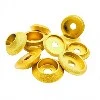
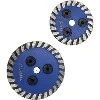
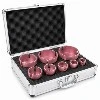
A high precision diamond grinding wheel is a super-abrasive tool engineered with synthetic diamond grits bonded to a steel core via resin, metal, vitrified, or electroplated matrices. It is specifically designed to machine ultra-hard materials-such as tungsten carbide, ceramics, and hardened tool steel-with dimensional tolerances as tight as ±0.001mm and surface finishes reaching Ra below 0.1μm. For procurement managers, OEM clients, and industrial distributors sourcing mold grinding solutions, understanding this tool's technical depth and commercial value is the first step toward smarter purchasing decisions.
Understanding High Precision Diamond Grinding Wheels
What Sets Them Apart from Conventional Abrasives?
High precision diamond grinding wheels, in contrast to silicon carbide or aluminum oxide wheels, use industrial-grade synthetic diamond, the hardest known abrasive material, bonded within a carefully engineered matrix. Standard abrasives just can't match the cutting performance of this mix, especially when working with mold steels, hard alloys, optical glass, and advanced ceramics. As a result, the tool keeps its shape longer, makes less heat, and stays accurate in terms of geometry over long production runs.
How They Are Made: The Production Process
A high precision diamond grinding wheel is made using a strict, multi-step method that directly affects how well it works in the field. To make sure that every item is the same, each step is closely watched.
The first step is to carefully machine the steel base body by turning, cutting, and grinding it to make sure it is flat and concentrically shaped. Then, synthetic diamonds are picked out, cleaned, degreased, and sieved by particle size. The next step is to weigh the diamond grits and mix them with the bond powder and filler in the right amounts. The mixture is then mixed evenly. The mixture is put into the mold, and hydraulic pressure is used to press it cold. This makes a dense, stable green body.
Before the curing or core sintering step, the diamond is locked into the material for good. Bronze metal bonds sinter at 750–850°C, resin bonds cure at 180–220°C, and vitrified ceramic bonds need 1,250–1,400°C. After being demolded, the wheel is carefully ground to remove any imperfections in its outer diameter, thickness, and inner hole. This is followed by a high-speed dynamic balance test to get rid of any vibrations. Before being stored and shipped, every finished wheel goes through a full inspection that looks at its size, shape, hardness, balance, and rotational strength.
From choosing the raw materials to the final dynamic balance, this level of process control is what makes a reliable precision wheel different from a generic abrasive product.
Benefits and Applications in Mold Grinding
Core Performance Advantages That Drive Real Results
When mold makers and tooling experts move from other types of abrasive wheels to high precision diamond grinding wheels, they can immediately tell and see the difference in how well they work. Here are the main reasons why these wheels are so important for making precise molds:
High grinding efficiency: diamond is much harder than most abrasives. When cutting speeds are faster, output per shift goes up, and cycle times go down for repeated mold finishing operations.
Long service life: Because wheels wear down very slowly, they need to be changed less often during production. This durability cuts down on machine downtime and, over time, the total cost of consumables by a large amount.
High machining precision: Complex mold profiles keep their shape and surface finish over large batch runs thanks to stable grinding performance with little movement.
Wide application range: it can be used on hard alloys, stone, ceramics, glass, and other materials that are hard to grind that are popular in mold, car, and stone working settings.
Low heat generation, no workpiece burning: The strong ability to sharpen itself and the effective chip evacuation keep the temperatures in the grinding zone low. This keeps sensitive workpiece surfaces from thermal damage or microstructural change.
Cost-effectiveness: Less downtime for wheel changes, less plastic waste due to heat damage, and higher production efficiency all add up to a lower cost per part over the life of the wheel.
Because of these benefits, high precision diamond grinding wheels are a good long-term investment because they solve the most common problems in mold grinding, such as heat damage, measurement drift, and high consumable costs.
Mold finishing is used in many industrial settings, such as for plastic injection tools, die casting molds, clay mold parts, car part tooling, and precise optical glass profiles. In every setting, the exact shape retention and surface quality that are needed can only be provided by a well-designed diamond wheel.
Choosing the Right Diamond Grinding Wheel for Your Needs
Key Selection Parameters to Evaluate
Selecting the wrong high precision diamond grinding wheel for the job will waste money and get bad results. The most important factors to look at are:
Grit size: coarser grits (D46–D107) are good for getting rid of rough material, while finer grits (D15–D0.5) get the smooth, mirror-like surfaces needed for precise mold work.
Bond type: Vitrified bonds are great for sensitive workpieces because they have a lot of holes and can sharpen themselves. Resin ties give the surface a better finish and make it more flexible. Metal links keep their shape the best for hard profile grinding.
Abrasive concentration: Usually between 75 and 125, a higher concentration raises the G-ratio (the amount of material removed per unit of wheel wear), which makes high-volume uses more efficient.
Core material: Cores made of high-modulus steel or aluminum reduce vibrations at speeds greater than 60 m/s, which is important for maintaining dynamic stability during mold cutting.
It is also important to know that high precision diamond grinding wheels shouldn't be used on ferrous mold steels because the carbon in the diamond reacts chemically with iron at high grinding temperatures. CBN (cubic boron nitride) wheels are the best choice for strengthened steel frames.
Maintenance and Optimization for Long-Term Performance
A high precision diamond grinding wheel is an important piece of equipment to buy, and how well it is taken care of directly affects how long it lasts. If you dress the wheel often, not just when the glaze starts to show, the abrasive layer stays uncovered and cuts well. Glazing is a common problem that happens when the bond is too strong for the job or when dressings aren't done often enough, burying worn diamonds instead of letting them fall off naturally.
Storage is also important. To keep the core from distorting, wheels should be kept dry, away from extreme temperatures, and stored flat or properly racked. The type of coolant you use also makes a difference. For example, oil-based coolants are better at lubricating and extending the life of profile grinding wheels, while water-based coolants are better at controlling heat in high-speed operations.
Truing and dressing serve distinct functions. The geometric form and concentricity of the wheel are restored by truing. The bond surface is removed by dressing to reveal new, sharp diamond grits. Both of these steps should be part of a regular maintenance schedule, not things that are done only when there is obvious wear.
Procurement and Ordering Guide for B2B Clients
To get a lot of high precision diamond grinding wheels, you need more than just low prices. Export certifications (CE, ISO) from qualified sources are a must. They should also have consistent quality control paperwork and be able to customize logos, packaging, grit specifications, and bond formulations for OEMs. For serious B2B procurement, you should expect dynamic balancing to G1.0 or G0.4 levels, full dimensional inspection reports, and sample approval processes.
When volume commitments are in line with supplier minimums, bulk ordering has a lot of benefits. Importers and distributors who handle multiple SKUs in different markets can lower their procurement risk by using flexible lead times, lower MOQ thresholds, and quick after-sales support.
Conclusion
Precision mold grinding demands tools that hold their geometry, resist thermal damage, and deliver repeatable surface quality across extended production cycles. A well-specified high precision diamond grinding wheel-matched to the right bond system, grit size, and application-solves the core challenges of mold finishing: dimensional drift, workpiece burning, and high consumable costs. With the right supplier relationship and a clear understanding of selection and maintenance principles, procurement teams can reduce total cost of ownership while elevating output quality. The insights in this guide are intended to support that decision with clarity and confidence.
FAQ
What grit size should I use for mold finishing?
Which grit to use relies on what stage of grinding you are in. For roughing passes, D46–D107 is usually used, D25–D46 for semi-finishing, and D15 or smaller for final surface finishing. Ultra-fine grits in the D6–D0.5 band are good for mold holes that need Ra below 0.1μm.
Can diamond wheels grind hardened steel molds?
When iron and diamond are heated to high temperatures, they react chemically, which speeds up the wear and tear on the high precision diamond grinding wheel. CBN wheels work better with mold steels that are made of iron. When it comes to hard materials, diamond wheels work best on carbide, ceramic, glass, and non-ferrous metals.
How do I extend my grinding wheel's service life?
Dress the wheel regularly, make sure you use the right coolant for the job, keep the wheels in a dry, stable place, and stay away from high infeed rates that cause excessive heat. Matching the bond's hardness to the material of the workpiece also stops glazing from happening too soon.
What does the G-ratio mean in practice?
The G-ratio tells you how much material from the item is taken away for every unit of wheel wear. A wheel with a higher G-ratio works better for mass production because it needs to be replaced less often, which lowers the cost of turning each part.
Partner with SNJ for Reliable Diamond Grinding Wheel Supply
SNJ - Danyang Sinodream Imp & Exp Co., Ltd., which was founded in 2003 - is a trusted high precision diamond grinding wheel supplier serving importers, OEM brand owners, and industrial buyers across the United States, Europe, and the Middle East. With full OEM customization, CE/ISO certifications, competitive bulk pricing, and a 24-hour response commitment, we support your sourcing needs at every stage. Contact us directly at Colin@sinodream.biz or explore our full product range.
References
1. Manufacturing Technology Today - 2022
2. International Journal of Advanced Manufacturing Technology - 2021
3. Abrasives Magazine - 2020
4. Industrial Diamond Review - 2019
5. Journal of Materials Processing Technology - 2023
6. FEPA (Federation of European Producers of Abrasives) Technical Standards Report - 2021