As a seasoned supplier of bi-metal hole saws, I often encounter a variety of questions from customers regarding the versatility and applicability of our products. One question that frequently arises is whether a bi-metal hole saw can be used for cutting thermoplastic. In this blog post, I will delve into the technical aspects of bi-metal hole saws and thermoplastics, explore the feasibility of using bi-metal hole saws for thermoplastic cutting, and provide some practical tips for achieving optimal results.
Understanding Bi - metal Hole Saws
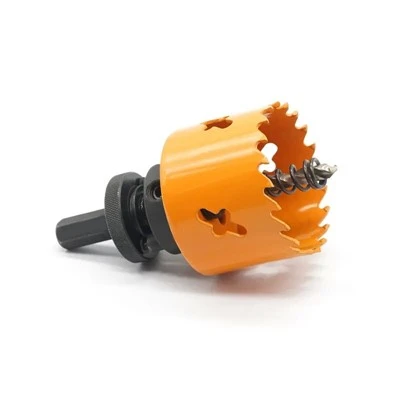
Bi - metal hole saws are a popular choice in the metalworking industry due to their durability and cutting efficiency. They are typically composed of two different types of metal: a high - speed steel (HSS) edge and a flexible alloy steel body. The HSS edge is designed to withstand high temperatures and resist wear, making it suitable for cutting through tough materials such as metal, wood, and plastic laminates. The alloy steel body provides the necessary strength and flexibility to prevent the saw from breaking during operation.
The unique combination of these two metals gives bi - metal hole saws several advantages. Firstly, they have a long service life compared to other types of hole saws. The HSS edge can maintain its sharpness for a relatively long time, reducing the frequency of blade replacements. Secondly, bi - metal hole saws can cut through a wide range of materials, which makes them a versatile tool in the workshop.
Characteristics of Thermoplastics
Thermoplastics are a class of polymers that become soft when heated and harden when cooled. This property allows them to be easily molded and shaped, making them widely used in various industries such as automotive, packaging, and consumer goods. Some common types of thermoplastics include polyethylene (PE), polypropylene (PP), polyvinyl chloride (PVC), and acrylonitrile butadiene styrene (ABS).
Thermoplastics have several characteristics that affect their machinability. They are generally softer than metals, which means they can be cut more easily. However, they also have a relatively low melting point. When subjected to high temperatures during cutting, thermoplastics can melt, stick to the cutting tool, and cause clogging. Additionally, thermoplastics can be prone to cracking or chipping if the cutting process is not carried out properly.
Can a Bi - metal Hole Saw Be Used for Cutting Thermoplastic?
The short answer is yes, a bi - metal hole saw can be used for cutting thermoplastic. However, there are several factors to consider to ensure a successful cutting process.
Advantages of Using Bi - metal Hole Saws for Thermoplastics
- Versatility: As mentioned earlier, bi - metal hole saws are designed to cut through a wide range of materials. Their sharp HSS edge can effectively penetrate the thermoplastic material, allowing for clean and precise cuts.
- Durability: Since thermoplastics are relatively soft compared to metals, the HSS edge of the bi - metal hole saw will not wear out quickly. This means that the hole saw can be used for multiple cutting operations without significant loss of performance.
Challenges and Considerations
- Heat Generation: One of the main challenges when cutting thermoplastics with a bi - metal hole saw is heat generation. The friction between the saw blade and the thermoplastic material can cause the temperature to rise, leading to melting and sticking. To mitigate this issue, it is important to use a slow cutting speed and apply a lubricant or coolant. Water or a specialized plastic cutting lubricant can be used to reduce friction and dissipate heat.
- Chip Evacuation: Another challenge is chip evacuation. When cutting thermoplastics, the chips can be stringy and tend to stick to the saw blade, causing clogging. To ensure proper chip evacuation, it is recommended to use a hole saw with large and well - spaced teeth. This allows the chips to be easily removed from the cutting area.
- Cutting Speed and Feed Rate: The cutting speed and feed rate are crucial for achieving a clean cut. A too - high cutting speed can generate excessive heat, while a too - low feed rate can cause the saw blade to rub against the material, leading to melting and poor cut quality. It is important to find the right balance between cutting speed and feed rate based on the type and thickness of the thermoplastic material.
Tips for Cutting Thermoplastics with Bi - metal Hole Saws
- Choose the Right Hole Saw: Select a bi - metal hole saw with the appropriate tooth geometry and pitch for the thermoplastic material. A hole saw with a fine tooth pitch is suitable for thin thermoplastics, while a coarser tooth pitch is better for thicker materials.
- Secure the Material: Make sure the thermoplastic material is firmly secured before cutting. This will prevent the material from moving or vibrating during the cutting process, which can result in uneven cuts or damage to the material.
- Use Lubrication: As mentioned earlier, applying a lubricant or coolant is essential to reduce heat and friction. Water can be a simple and effective lubricant for cutting thermoplastics. Alternatively, you can use a commercial plastic cutting lubricant for better results.
- Monitor the Cutting Process: Keep an eye on the cutting process to ensure that the saw blade is cutting smoothly. If you notice any signs of melting, clogging, or poor cut quality, adjust the cutting speed, feed rate, or lubrication as necessary.
Other Hole Saw Options for Thermoplastics
While bi - metal hole saws can be used for cutting thermoplastics, there are also other types of hole saws that are specifically designed for plastic materials. For example, TCT (Tungsten Carbide - Tipped) hole saws are known for their excellent cutting performance on plastics. TCT hole saws have a tungsten carbide tip that is extremely hard and wear - resistant. They can cut through thermoplastics more quickly and cleanly than bi - metal hole saws in some cases.
If you are interested in exploring other hole saw options for your plastic cutting needs, you can check out our Hot Sale TCT Hole Saw, TCT Hole Saw, and CHINA Tools TCT Hole Saw. These TCT hole saws are designed to provide high - quality cuts on a variety of plastic materials.

Conclusion
In conclusion, a bi - metal hole saw can be a viable option for cutting thermoplastics, provided that the right techniques and precautions are taken. By understanding the characteristics of both bi - metal hole saws and thermoplastics, and by following the tips mentioned above, you can achieve clean and precise cuts on thermoplastic materials.
If you are in the market for high - quality bi - metal hole saws or other cutting tools, we invite you to contact us for procurement and further discussions. Our team of experts is ready to assist you in finding the best solutions for your specific cutting needs.
References
- "Machining of Plastics" by Society of Plastics Engineers.
- "Handbook of Thermoplastics" by O. Olabisi.