Hey there! As an Auger Bit supplier, I've been in the thick of the drilling game for quite some time. One question that keeps coming up from my customers is how the drill bit speed affects the wear of an Auger Bit. Well, let's dive right into it.


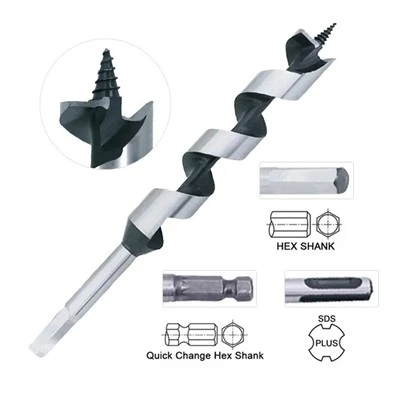
First off, let's talk about what an Auger Bit is. An Auger Bit is a type of drill bit that's commonly used for drilling holes in wood, although it can also be used in other materials like plastic and soft metals. It has a unique design with a spiral shape that helps to remove the material as the bit drills through it. There are different types of Auger Bits, like the 22mm*460mmAuger Bit, Threaded Tip Carbon Steel Woodworking Auger Bit, and Carbon Steel Woodworking Auger Bit. Each type has its own characteristics and is suitable for different applications.
Now, let's get to the main topic - how drill bit speed impacts the wear of an Auger Bit. When you're using an Auger Bit, the speed at which it rotates plays a crucial role in determining how quickly it wears out. There are two main aspects to consider: too slow and too fast.
If the drill bit speed is too slow, it can cause excessive wear on the Auger Bit. When the bit rotates at a low speed, it has to work harder to cut through the material. This means that the cutting edges of the bit are in contact with the material for a longer time, which leads to more friction. The increased friction generates heat, and over time, this heat can cause the metal of the bit to soften. As the metal softens, it becomes more prone to wear and tear. The cutting edges can start to dull, and the bit may even start to chip. This not only reduces the efficiency of the drilling process but also shortens the lifespan of the Auger Bit.
On the other hand, if the drill bit speed is too fast, it can also have a negative impact on the wear of the Auger Bit. When the bit rotates at a very high speed, the cutting edges can experience a lot of stress. The rapid rotation can cause the bit to vibrate, which can lead to uneven wear. The high speed also means that the material is being removed at a faster rate, and this can put a lot of pressure on the bit. If the bit isn't designed to handle such high speeds, it can break or become damaged. Additionally, the high speed can generate a significant amount of heat, which can cause the bit to overheat. Overheating can lead to thermal expansion, which can further damage the bit and affect its performance.
So, what's the ideal drill bit speed for an Auger Bit? Well, it depends on several factors, such as the type of material you're drilling, the size of the bit, and the specific design of the Auger Bit. For example, when drilling in softwood, you can generally use a higher speed compared to drilling in hardwood. A smaller bit can also usually handle a higher speed than a larger one.
To determine the right speed for your Auger Bit, it's a good idea to refer to the manufacturer's recommendations. Most manufacturers provide guidelines on the recommended drill bit speeds for their products. These guidelines are based on extensive testing and are designed to ensure optimal performance and longevity of the Auger Bit.
Another thing to keep in mind is that the quality of the Auger Bit also plays a role in how it responds to different drill bit speeds. A high-quality Auger Bit, made from good materials and with a well-designed cutting edge, is generally more resistant to wear and can handle a wider range of speeds. At our company, we offer a variety of high-quality Auger Bits that are designed to perform well at different speeds and in different applications.
In addition to drill bit speed, there are other factors that can affect the wear of an Auger Bit. The type of material you're drilling is one of the most important factors. Harder materials, like hardwood or metal, will cause more wear on the bit compared to softer materials like softwood or plastic. The feed rate, which is how fast you push the bit into the material, also matters. If you push the bit too hard or too fast, it can increase the wear on the bit.
Proper maintenance of the Auger Bit is also crucial for reducing wear. After each use, it's a good idea to clean the bit to remove any debris or chips. You can use a brush or compressed air to clean the bit. Regularly inspecting the bit for signs of wear, such as dull cutting edges or chips, can also help you catch any problems early and take appropriate action.
In conclusion, the drill bit speed has a significant impact on the wear of an Auger Bit. Finding the right speed for your specific application is essential for ensuring optimal performance and longevity of the bit. By considering factors like the type of material, the size of the bit, and following the manufacturer's recommendations, you can minimize wear and get the most out of your Auger Bit.
If you're in the market for high-quality Auger Bits or have any questions about drill bit speed and wear, don't hesitate to reach out. We're here to help you find the right products for your needs and ensure that you have a smooth and efficient drilling experience.
References
- Some general knowledge about drill bits and materials from industry experience.
- Manufacturer's guidelines and product specifications for Auger Bits.