When it comes to maintaining a beautiful lawn, the speed at which you cut the grass on a lawn mower plays a crucial role. As a reputable Cutting Grass supplier, we understand the significance of different cutting speeds and how they can impact the overall quality of your lawn care. In this blog, we will explore the various speeds for cutting grass on a lawn mower and their implications.
Understanding the Basics of Lawn Mower Speeds
Lawn mowers come with different speed settings, which can generally be classified into slow, medium, and fast speeds. Each speed setting is designed to serve specific purposes and is suitable for different types of grass and lawn conditions.
Slow Speed (1 - 2 MPH)
Slow speed is ideal for several situations. Firstly, when dealing with very long or thick grass, a slow speed allows the lawn mower to cut through the grass more effectively. The blades have more time to engage with the grass, ensuring a clean and even cut. This is especially important as it prevents the mower from clogging, which can damage the blades and reduce the efficiency of the mower.
Secondly, slow speed is beneficial when mowing around delicate areas such as flower beds, trees, or other landscape features. It gives you better control over the mower, allowing you to navigate around these areas with precision and avoid accidentally damaging them.
For example, if you have a section of your lawn that has not been mowed for a while and the grass has grown quite tall, setting your lawn mower to a slow speed will ensure that you get a thorough and clean cut.
Medium Speed (2 - 3 MPH)
Medium speed is the most commonly used speed setting for regular lawn mowing. It strikes a balance between cutting efficiency and the quality of the cut. At this speed, the lawn mower can cover a reasonable amount of ground in a relatively short time while still providing a clean and even cut.
This speed is suitable for most types of grass, including Bermuda grass, Kentucky bluegrass, and fescue. It is also a good choice when the grass is of average height and density. For instance, if you mow your lawn on a regular basis and the grass is about 3 - 4 inches tall, a medium speed will be sufficient to keep your lawn looking neat and well - maintained.
Fast Speed (3+ MPH)
Fast speed is typically used when mowing large, open areas of the lawn where there are no obstacles and the grass is short and thin. At this speed, the lawn mower can cover a large area quickly, saving you time and effort.
However, it's important to note that using a fast speed on long or thick grass can result in an uneven cut. The blades may not have enough time to fully engage with the grass, leaving behind uncut patches or tearing the grass instead of cutting it cleanly. So, it should only be used under the appropriate conditions.
For example, if you have a large backyard with short, well - maintained grass, you can set your lawn mower to a fast speed to get the job done more efficiently.
Factors Affecting the Choice of Cutting Speed
Several factors can influence the choice of the appropriate cutting speed for your lawn mower.
Grass Type
Different grass types have different growth patterns and textures, which can affect the cutting speed. For example, fine - bladed grasses like bentgrass require a slower cutting speed to ensure a clean cut. On the other hand, coarser grasses like zoysia grass can tolerate a slightly faster speed.
Grass Height and Density
As mentioned earlier, the height and density of the grass are important factors. Long and thick grass should be mowed at a slow speed, while short and thin grass can be mowed at a faster speed. If you try to mow long grass at a fast speed, the mower may struggle, and the cut quality will be poor.
Lawn Terrain
The terrain of your lawn also plays a role. If your lawn has slopes, bumps, or uneven areas, a slower speed is recommended. This gives you better control over the mower and reduces the risk of accidents. In contrast, flat and smooth lawns can be mowed at a faster speed.
The Importance of Choosing the Right Speed
Choosing the right cutting speed is not just about convenience; it has a significant impact on the health and appearance of your lawn.
Lawn Health
A clean and even cut is essential for the health of your grass. When the grass is cut properly, it can recover more quickly and grow stronger. Using the wrong speed can result in ragged cuts, which can make the grass more susceptible to diseases and pests.
Aesthetic Appeal
A well - mowed lawn enhances the aesthetic appeal of your property. Choosing the right speed ensures that your lawn looks neat, uniform, and attractive. An uneven or poorly cut lawn can detract from the overall beauty of your landscape.
Our Cutting Grass Products and Their Compatibility with Different Speeds
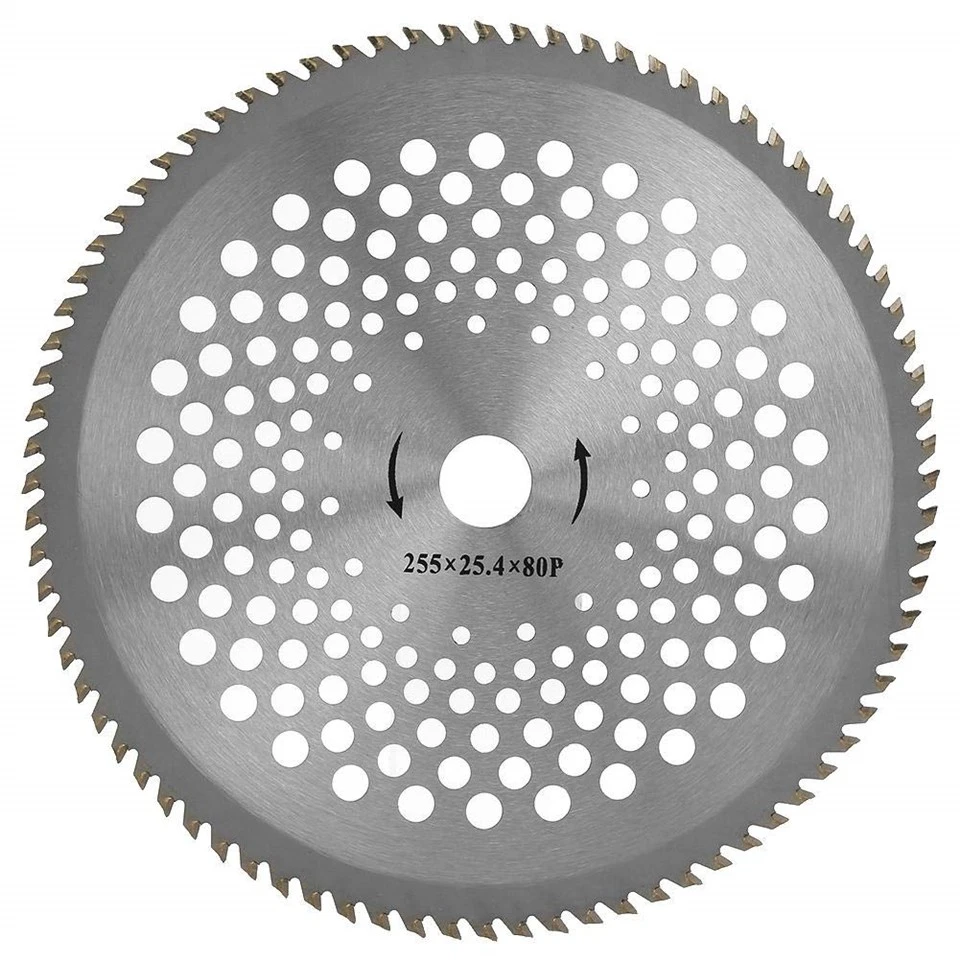
As a Cutting Grass supplier, we offer a range of high - quality products that are designed to work effectively at different cutting speeds. Our TCT Saw Blade for Grass Cutting is made with advanced technology and high - quality materials. It can withstand the rigors of slow - speed mowing through thick grass as well as fast - speed mowing on short grass.
Our Saw Blade For Cutting Grass High Quality is another excellent option. It is engineered to provide a clean and precise cut at all speeds, ensuring that your lawn looks its best.
And our TCT Saw Blade For Grass Cutting High Quality is specifically designed to optimize the cutting performance at different speeds, making it a versatile choice for any lawn mowing task.
Conclusion
In conclusion, understanding the different speeds for cutting grass on a lawn mower is essential for effective lawn care. By choosing the right speed based on the grass type, height, density, and lawn terrain, you can ensure a clean, even cut that promotes the health and beauty of your lawn.
As a trusted Cutting Grass supplier, we are committed to providing you with the best products to meet your lawn mowing needs. If you are interested in learning more about our products or have any questions regarding lawn mower cutting speeds, we encourage you to contact us for a procurement discussion. We look forward to helping you achieve a beautiful and healthy lawn.
References
- "Lawn Mowing Basics" by Lawn Care Association
- "The Science of Grass Cutting" by Horticultural Research Institute