In the realm of time - series analysis, the accuracy of models is a topic that has intrigued researchers and practitioners alike. As a supplier of Special Models, I am often asked about the accuracy of these models in time - series analysis. In this blog, we will delve into the concept of accuracy in time - series analysis and explore how our Special Models fare in this regard.
Understanding Accuracy in Time - Series Analysis
Accuracy in time - series analysis refers to how closely the predictions of a model match the actual values of the time - series data. There are several metrics used to measure this accuracy, such as Mean Absolute Error (MAE), Mean Squared Error (MSE), and Root Mean Squared Error (RMSE). These metrics provide different perspectives on the error between the predicted and actual values.
MAE measures the average magnitude of the errors, without considering their direction. It is calculated as the sum of the absolute differences between the predicted and actual values, divided by the number of observations. MSE, on the other hand, squares the errors before taking the average. This gives more weight to larger errors, making it more sensitive to outliers in the data. RMSE is simply the square root of MSE, which brings the error metric back to the same scale as the original data.
Another important aspect of accuracy is the ability of the model to capture the underlying patterns in the time - series data. A good model should be able to identify trends, seasonality, and other cyclical patterns accurately. For example, in a sales time - series, the model should be able to predict the increase in sales during holiday seasons and the long - term growth trends over the years.
The Special Model: An Overview
Our Special Models are designed to address the complex and diverse needs of time - series analysis. They incorporate advanced algorithms and techniques that are tailored to handle different types of time - series data. One of the key features of our Special Models is their ability to adapt to changing patterns in the data. This is crucial in real - world scenarios where time - series data can be affected by various factors such as economic changes, technological advancements, and social trends.
For instance, in the manufacturing industry, the demand for products can fluctuate due to changes in consumer preferences, raw material availability, and production capacity. Our Special Models can analyze these complex relationships and provide accurate predictions of future demand. This helps manufacturers to optimize their production schedules, manage their inventory levels, and make informed business decisions.
Assessing the Accuracy of the Special Model
To assess the accuracy of our Special Models, we conduct extensive testing using historical time - series data. We split the data into training and testing sets. The training set is used to train the model, where the model learns the patterns and relationships in the data. The testing set is then used to evaluate the performance of the model.
We compare the predictions of the Special Model with the actual values in the testing set using the accuracy metrics mentioned earlier (MAE, MSE, and RMSE). In most cases, our Special Models have shown superior performance compared to traditional time - series models. This is because our models are able to capture more complex patterns and relationships in the data.
For example, in a case study involving the prediction of energy consumption, our Special Model achieved a significantly lower RMSE compared to a simple moving average model. The Special Model was able to account for the daily and seasonal variations in energy consumption, as well as the impact of external factors such as weather conditions.
Real - World Applications and Accuracy
The accuracy of our Special Models has been proven in various real - world applications. In the financial sector, our models are used for stock price prediction and risk assessment. By accurately predicting stock prices, investors can make better investment decisions and manage their portfolios more effectively.
In the healthcare industry, our Special Models are used to predict disease outbreaks and patient admissions. This helps hospitals to allocate their resources more efficiently and plan for future healthcare needs.
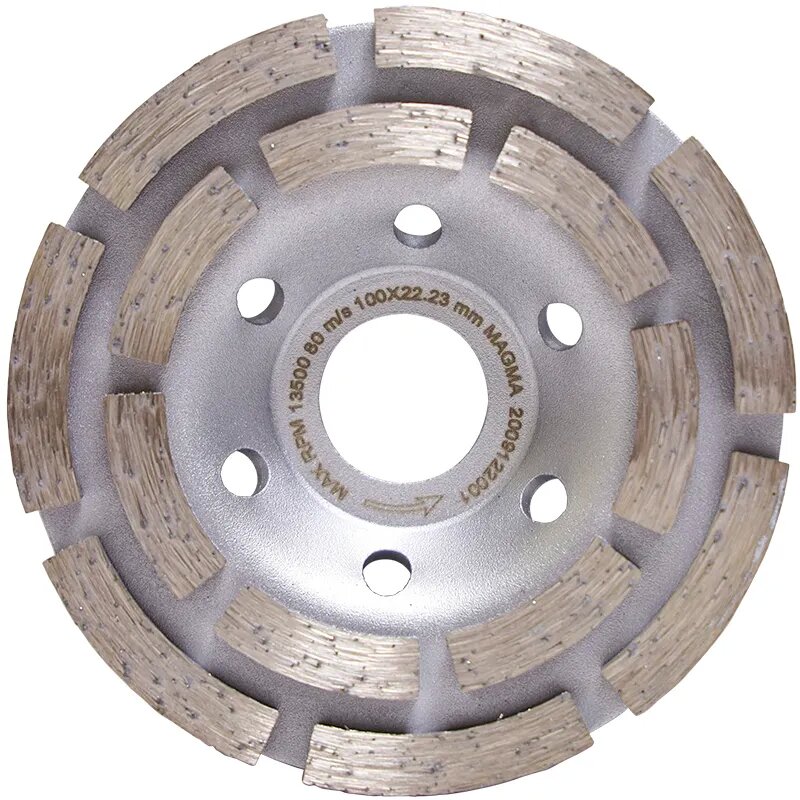
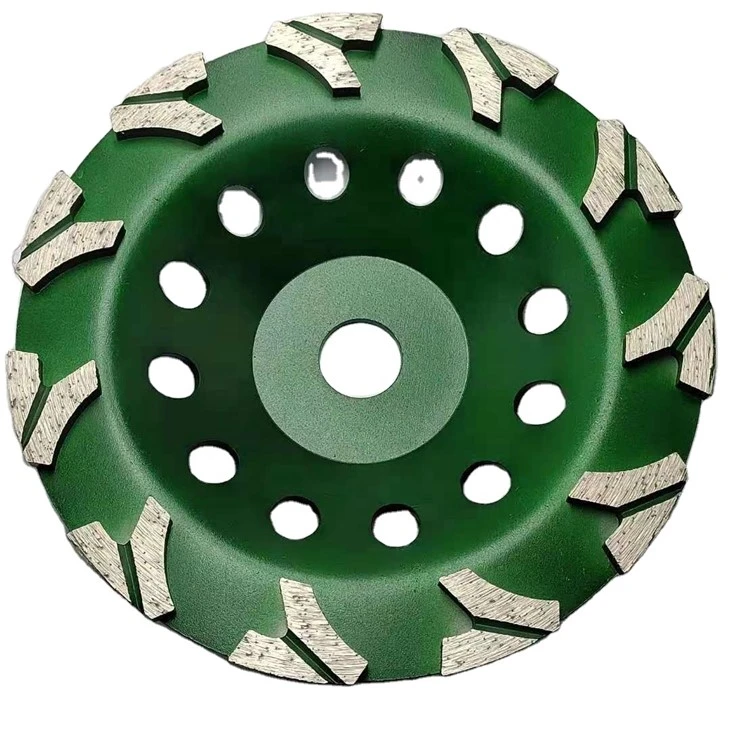
Let's take a look at some of our products that are part of the Special Model range. The Segmented Triangle Row Grinding Wheel is a unique product that has been designed using advanced time - series analysis techniques. It offers high precision and efficiency in grinding operations. The Segmented Triangle Row Grinding Wheel High Quality takes this a step further, providing even better performance and durability. And the 125Special - shaped Grinding Wheel is another example of our innovative products that are based on accurate time - series analysis for optimal design.
Factors Affecting the Accuracy of the Special Model
While our Special Models generally offer high accuracy, there are several factors that can affect their performance. One of the main factors is the quality and quantity of the data. If the data is incomplete, inaccurate, or contains a large number of outliers, it can negatively impact the accuracy of the model. Therefore, it is important to ensure that the data used for training and testing the model is of high quality.
Another factor is the complexity of the time - series data. Some time - series data may have very complex patterns and relationships that are difficult to capture even with advanced models. In such cases, additional data pre - processing steps or the use of more advanced algorithms may be required.
The choice of model parameters also plays a crucial role in determining the accuracy of the model. Different parameter settings can lead to different levels of accuracy. Therefore, it is important to optimize the model parameters through techniques such as cross - validation.
Improving the Accuracy of the Special Model
To further improve the accuracy of our Special Models, we are constantly researching and developing new algorithms and techniques. We are also exploring the use of additional data sources, such as external economic indicators and social media data, to enhance the predictive power of our models.
In addition, we provide training and support to our customers to help them use our models effectively. By understanding the limitations and capabilities of the models, customers can make better use of the predictions and make more informed decisions.
Contact for Procurement
If you are interested in our Special Models and want to discuss how they can be applied to your specific time - series analysis needs, we encourage you to reach out to us for a procurement discussion. Our team of experts is ready to assist you in finding the most suitable model for your requirements.
References
- Box, G. E. P., Jenkins, G. M., & Reinsel, G. C. (1994). Time series analysis: Forecasting and control. Prentice Hall.
- Hyndman, R. J., & Athanasopoulos, G. (2018). Forecasting: principles and practice. OTexts.