Hey there! As a supplier of bi - metal hole saws, I often get asked about the cutting efficiency of these nifty tools. So, let's dive right in and break it down.
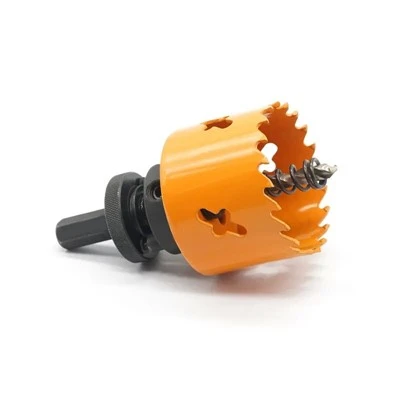
First off, what exactly is a bi - metal hole saw? Well, it's a cutting tool made from two different types of metals. Usually, the teeth are made from high - speed steel (HSS), which is super hard and can withstand high temperatures. The body is made from a different, more flexible metal. This combination gives the bi - metal hole saw some unique advantages when it comes to cutting.
One of the key factors that determine the cutting efficiency of a bi - metal hole saw is the tooth design. The teeth on these hole saws are typically designed with a specific geometry. They are sharp and have a certain pitch, which is the distance between each tooth. A well - designed tooth geometry allows the hole saw to cut through materials smoothly and quickly. For example, if the teeth are too far apart, the saw might not be able to remove material efficiently. On the other hand, if they are too close together, they can get clogged up with debris, slowing down the cutting process.
The type of material you're cutting also plays a huge role in the cutting efficiency. Bi - metal hole saws are great for cutting a variety of materials, including metal, wood, and plastic. When cutting metal, the high - speed steel teeth can easily slice through the tough material. However, different metals have different hardness levels. For instance, cutting through stainless steel is much more challenging than cutting through mild steel. Stainless steel is harder and more abrasive, which means the hole saw has to work harder. This can reduce the cutting speed and also wear out the teeth faster.
When it comes to wood, bi - metal hole saws can cut through it like a hot knife through butter. Wood is a relatively soft material, so the saw can make quick work of it. The key here is to make sure the teeth are sharp enough to get a clean cut. If the teeth are dull, the saw might tear the wood fibers, resulting in a rough and uneven hole.
Plastic is another material that bi - metal hole saws can handle well. But plastic has its own quirks. It can melt if the cutting speed is too high or if there's too much friction. So, when cutting plastic, it's important to use a lower cutting speed and apply some lubricant to reduce friction.
Another factor that affects cutting efficiency is the speed at which the hole saw is rotating. The ideal speed depends on the material you're cutting and the size of the hole saw. Generally, for smaller hole saws, you can use a higher rotation speed. But for larger hole saws, a lower speed is often better. If you use too high a speed, the saw can overheat, which can damage the teeth and reduce the cutting efficiency. On the other hand, if the speed is too low, the saw might not be able to cut through the material effectively.
The quality of the bi - metal hole saw also matters a great deal. A high - quality hole saw is made with better materials and more precise manufacturing processes. The teeth are harder and more durable, which means they can maintain their sharpness for longer. This results in better cutting efficiency over time. Cheaper hole saws might seem like a good deal at first, but they often wear out quickly and need to be replaced more frequently.
Now, let's talk about some of the products we offer. If you're looking for top - notch hole saws, you might want to check out our CHINA Tools TCT Hole Saw. These hole saws are designed with the latest technology to ensure maximum cutting efficiency. We also have our Hot Sale TCT Hole Saw, which is a popular choice among our customers. And of course, our TCT Hole Saw is another great option for those who need a reliable cutting tool.
In addition to the factors I've mentioned above, proper maintenance of the bi - metal hole saw is essential for maintaining cutting efficiency. After each use, you should clean the saw to remove any debris or chips. You can use a brush or compressed air to do this. Also, make sure to lubricate the saw regularly. Lubrication reduces friction, which in turn reduces heat and wear on the teeth. This can significantly extend the life of the hole saw and keep it cutting efficiently.

It's also important to store the hole saw properly. Keep it in a dry place to prevent rusting. If the saw gets rusty, it can affect the cutting performance and even damage the teeth.
If you're in the market for a bi - metal hole saw, you want to make sure you're getting the best value for your money. That means looking for a saw that offers high cutting efficiency, durability, and is made from quality materials. Our products are designed to meet these criteria, and we're confident that you'll be satisfied with the performance of our hole saws.
Whether you're a professional contractor or a DIY enthusiast, having a reliable bi - metal hole saw can make your work a lot easier. It can save you time and effort, and ensure that you get clean and precise holes every time.
So, if you're interested in learning more about our bi - metal hole saws or want to place an order, don't hesitate to get in touch. We're here to help you find the right tool for your needs and answer any questions you might have. Let's start a conversation and see how we can work together to improve your cutting efficiency.
References
- "Cutting Tools Handbook", Industrial Press Inc.
- "The Basics of Metal Cutting", American Machinist Magazine