

Granite, a widely used natural stone in construction and decoration, is renowned for its durability and aesthetic appeal. As a cutting granite supplier, I've witnessed firsthand how the density of granite can significantly impact the cutting process. In this blog, I'll delve into the effects of granite density on cutting and how it relates to the tools and techniques we use.
Understanding Granite Density
Granite is an igneous rock composed mainly of quartz, feldspar, and mica. Its density can vary depending on several factors, including its mineral composition, porosity, and the geological conditions under which it was formed. Generally, granite density ranges from 2.6 to 2.75 grams per cubic centimeter (g/cm³). Higher - density granite typically contains more tightly packed minerals, making it harder and more resistant to wear.
Impact on Cutting Speed
One of the most noticeable effects of granite density on cutting is the cutting speed. When dealing with high - density granite, the cutting process is often slower. This is because the tightly packed minerals in high - density granite require more force to break apart. For example, a saw blade that can cut through low - density granite at a relatively high speed may struggle to maintain the same pace when cutting high - density granite.
As a cutting granite supplier, we've found that customers often underestimate the time required to cut high - density granite. This can lead to project delays if not properly accounted for. To address this, we recommend using high - performance saw blades designed specifically for cutting high - density materials. Our TOP Quality Continuous Diamond Saw Blade For Granite is an excellent choice for this purpose. The diamond particles on the blade are able to withstand the high forces required to cut through dense granite, allowing for a more efficient cutting process.
Wear and Tear on Cutting Tools
Granite density also has a significant impact on the wear and tear of cutting tools. High - density granite is more abrasive than low - density granite, which means that cutting tools are subject to more wear during the cutting process. Saw blades, in particular, are prone to rapid dulling when cutting high - density granite.
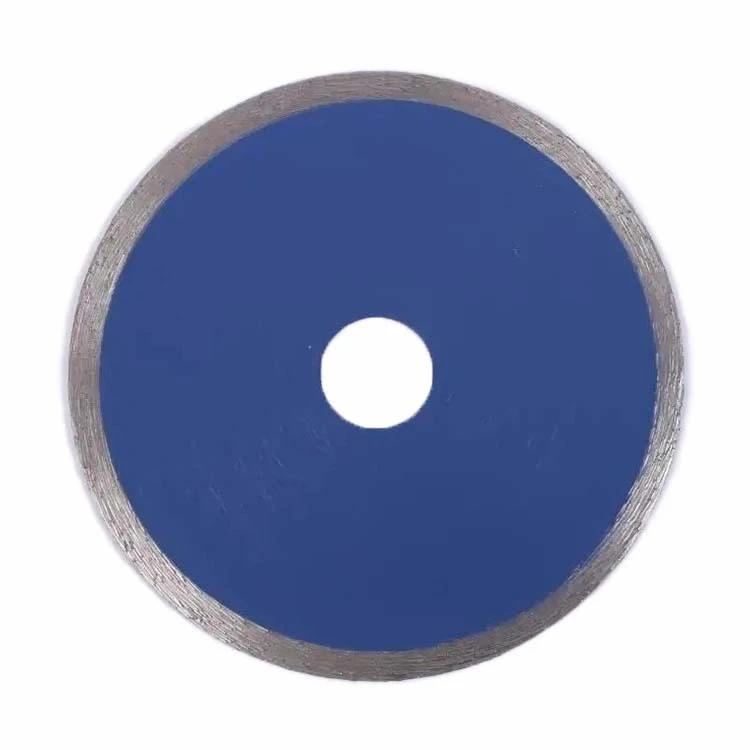

The abrasive nature of high - density granite can cause the diamond particles on the saw blade to wear down quickly. This not only reduces the cutting efficiency but also shortens the lifespan of the blade. To combat this, we offer High Quality Cold Pressed Continuous Diamond Saw Blade For Cutting Granite. These blades are manufactured using a cold - pressing process that ensures a more even distribution of diamond particles, resulting in better wear resistance and a longer lifespan.
Cutting Quality
The density of granite can also affect the quality of the cut. High - density granite is more likely to produce a smoother and more precise cut compared to low - density granite. This is because the tightly packed minerals in high - density granite provide a more uniform surface for the cutting tool to work on.
However, achieving a high - quality cut in high - density granite still requires the right tools and techniques. Our 300x50/60x3.2x10/12/15x21 Cutting Granite products are designed to provide a clean and accurate cut, even in high - density granite. The precise dimensions and high - quality materials used in these products ensure that the cut edges are smooth and free of chips or cracks.
Energy Consumption
Cutting high - density granite also consumes more energy. Since more force is required to cut through the dense material, the cutting equipment has to work harder, which leads to increased energy consumption. This can have a significant impact on the overall cost of the cutting process, especially for large - scale projects.
To reduce energy consumption, it's important to use efficient cutting tools and equipment. Our diamond saw blades are designed to minimize energy waste by providing a more efficient cutting action. By using these blades, customers can not only save on energy costs but also reduce their environmental impact.
Dust Generation
Another factor affected by granite density is dust generation. High - density granite tends to produce more dust during the cutting process. This is because the more abrasive nature of high - density granite causes more particles to be released when the material is cut.
Dust generation can be a health hazard for workers, so it's important to have proper dust collection systems in place. Additionally, excessive dust can also affect the performance of the cutting equipment. Our cutting tools are designed to minimize dust generation as much as possible, but it's still essential to take appropriate safety measures when cutting high - density granite.
Choosing the Right Cutting Method
Given the various effects of granite density on cutting, it's crucial to choose the right cutting method. For high - density granite, methods such as diamond wire sawing or water jet cutting may be more suitable. These methods can provide a more precise and efficient cut, especially for complex shapes and large - scale projects.
However, for smaller projects or simpler cuts, traditional saw blades can still be effective. The key is to select the right blade for the specific density of the granite. As a cutting granite supplier, we offer a wide range of cutting tools and can provide expert advice on choosing the most appropriate method for your project.
Conclusion
In conclusion, the density of granite has a profound impact on the cutting process. It affects cutting speed, tool wear, cutting quality, energy consumption, and dust generation. As a cutting granite supplier, we understand the challenges associated with cutting different densities of granite and are committed to providing high - quality cutting tools and solutions.
If you're in the market for cutting granite products or need advice on cutting granite of different densities, we'd love to hear from you. Contact us to discuss your specific requirements and let us help you find the best cutting solutions for your project.
References
- Deer, W. A., Howie, R. A., & Zussman, J. (1992). Rock - forming minerals: Vol. 4. Framework silicates. Longman Scientific & Technical.
- Krebs, R. E. (2003). Geological time: How it works and how we know it. Greenwood Press.
- Tucker, M. E. (2001). Sedimentary petrology: An introduction. Blackwell Science.






